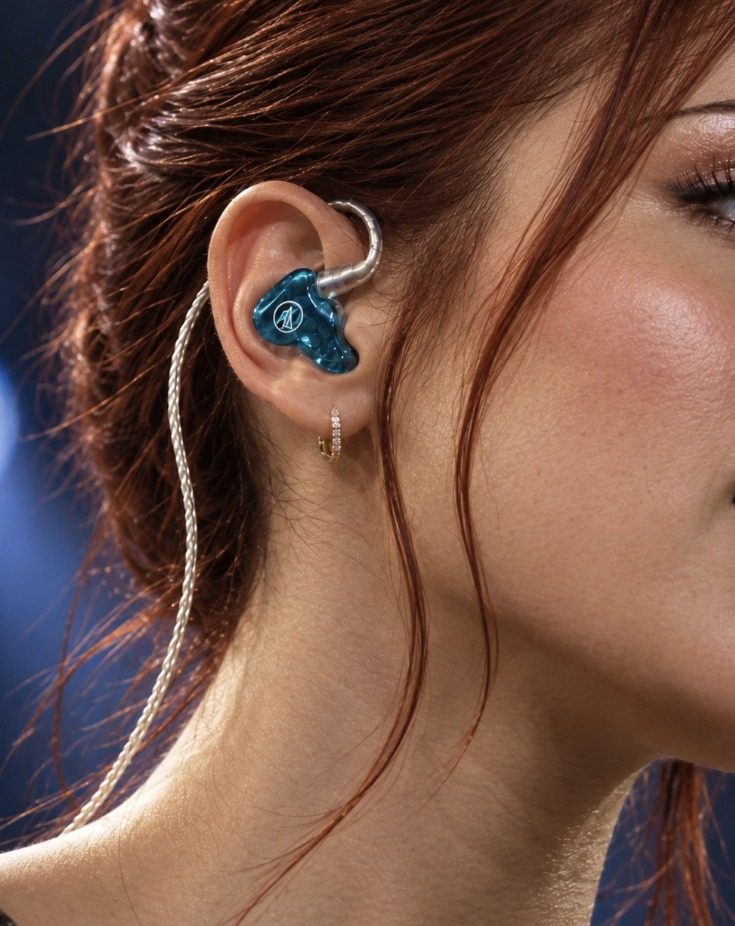
A good in-ear mix usually does not sound good. Solo the mix of an experienced performer and it is thin, dry, and lopsided. It is also what they need.
Years ago I mixed front of house for a jazz vocalist who refused to wear in-ears. Most of her band had switched. Her rider still called for wedges. Her monitor engineers tried several times to move her over, and every time it was the sparse mix that she hated.
In-ears exist for good reasons. I came up when every stage ran on wedges, and house and monitor levels chased each other upward for years. Isolation ends that, as long as the level in the ears stays sensible, and it lets us send a click or a guide track you would never put in a wedge.
Isolation is also unnatural. On an open stage, a listener separates sources partly by direction. In a sealed ear everything arrives inside the head, with far less separation than a stage gives, so every source added to the mix masks some of the ones the performer is listening for. An experienced performer needs a rhythm reference, a pitch reference, and themselves. Anything else sits low enough to stay out of the way.
That mix is the wrong one for someone new to in-ears. They want everything, with their own voice on top, and they want it to sound like the wedge they are giving up.
The vocalist finally moved when more of the venues she played stopped allowing wedges. Her monitor engineer at the time started her on a full-band mix that sounded close to her album and spent the next year taking things out. She ended on piano, her own voice, and a single drum overhead.
I work the same way with the 4 to 8 in-ear mixes I build every Sunday. Give a new performer the mix they ask for, and plan from the first day to take most of it away.