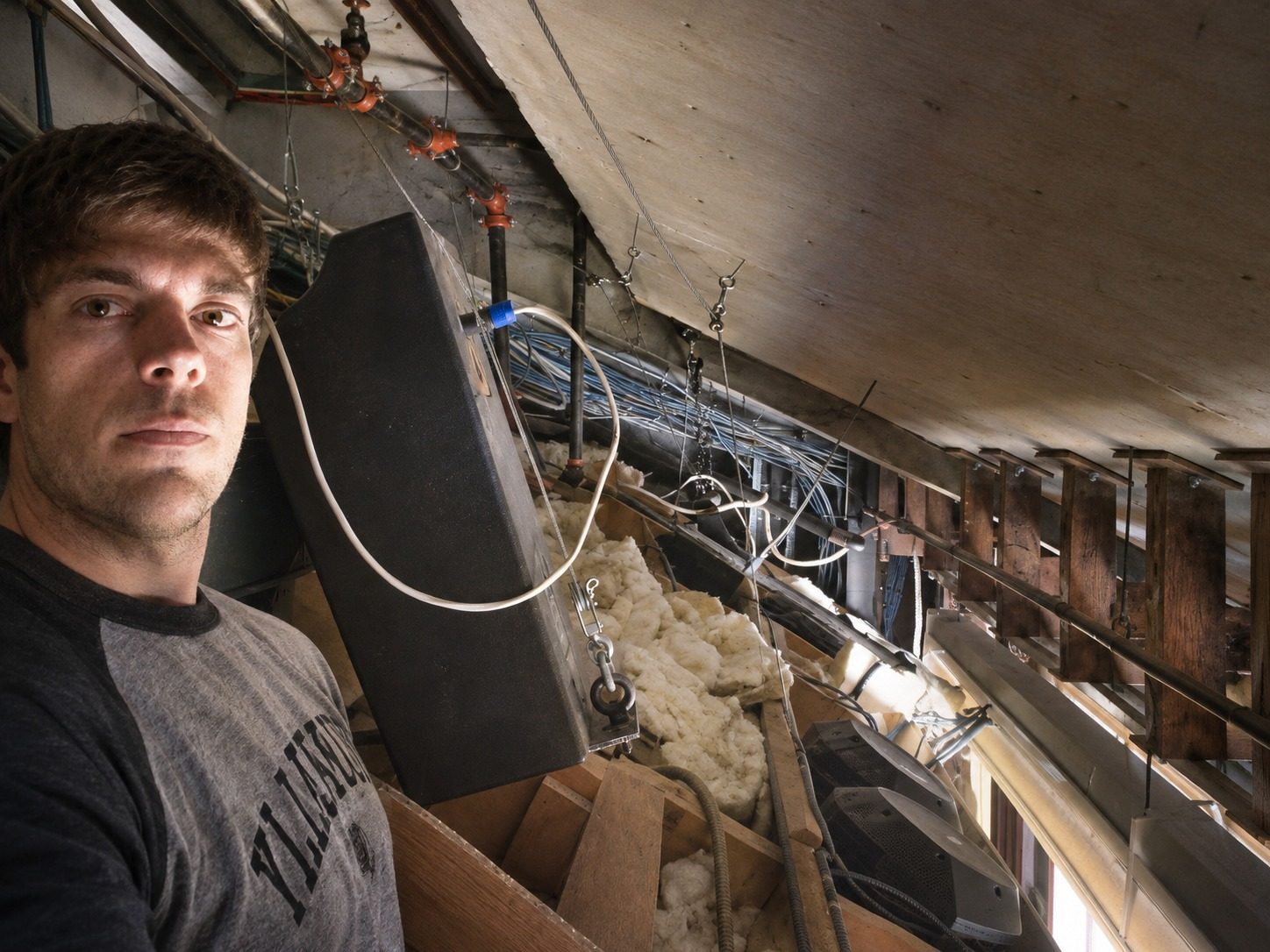
For 4 years I ran technical operations at a performing arts center near Boston, and when I started I couldn't figure out why some seating areas never sounded right.
The room was not the problem. The architecture was beautiful and the acoustics were excellent. The sound system had been designed alongside the acoustician, and the equipment was first rate. On paper, everything that should produce good sound was there.
A room that sounds good is the result of 4 steps, taken in order. The room has to be designed for how it will be used. The system has to be designed for that room. Then the system has to be installed and aimed the way the design intended, and only after that does setup and tuning mean anything. The same order holds for video and lighting. In that building the first 2 steps had been done well and the third had not.
I couldn't see that, because the loudspeakers were hidden behind architectural details. So I worked the problem from the console and the processor. I tried gain shading, delay changes, different EQ curves, and every other trick I knew. The coverage problems stayed where they were.
Then a crossover failed, and the repair gave me the chance to get to the loudspeakers. While the techs had access, I sat in the house and had them re-aim the system. A few degrees down, a couple of feet lower, improved splay angles, and better horizontal aiming. None of the changes was large. It took a full day of small adjustments.
The first show after that work felt like mixing in a different room. Coverage was even in areas that had never sounded right, and the hot spots and comb filtering were under control. I had been trying to tune my way around a problem that a day of re-aiming fixed.
If part of a room has never sounded right and every fix so far has been made in the processor, go look at the loudspeakers themselves before you touch another filter.