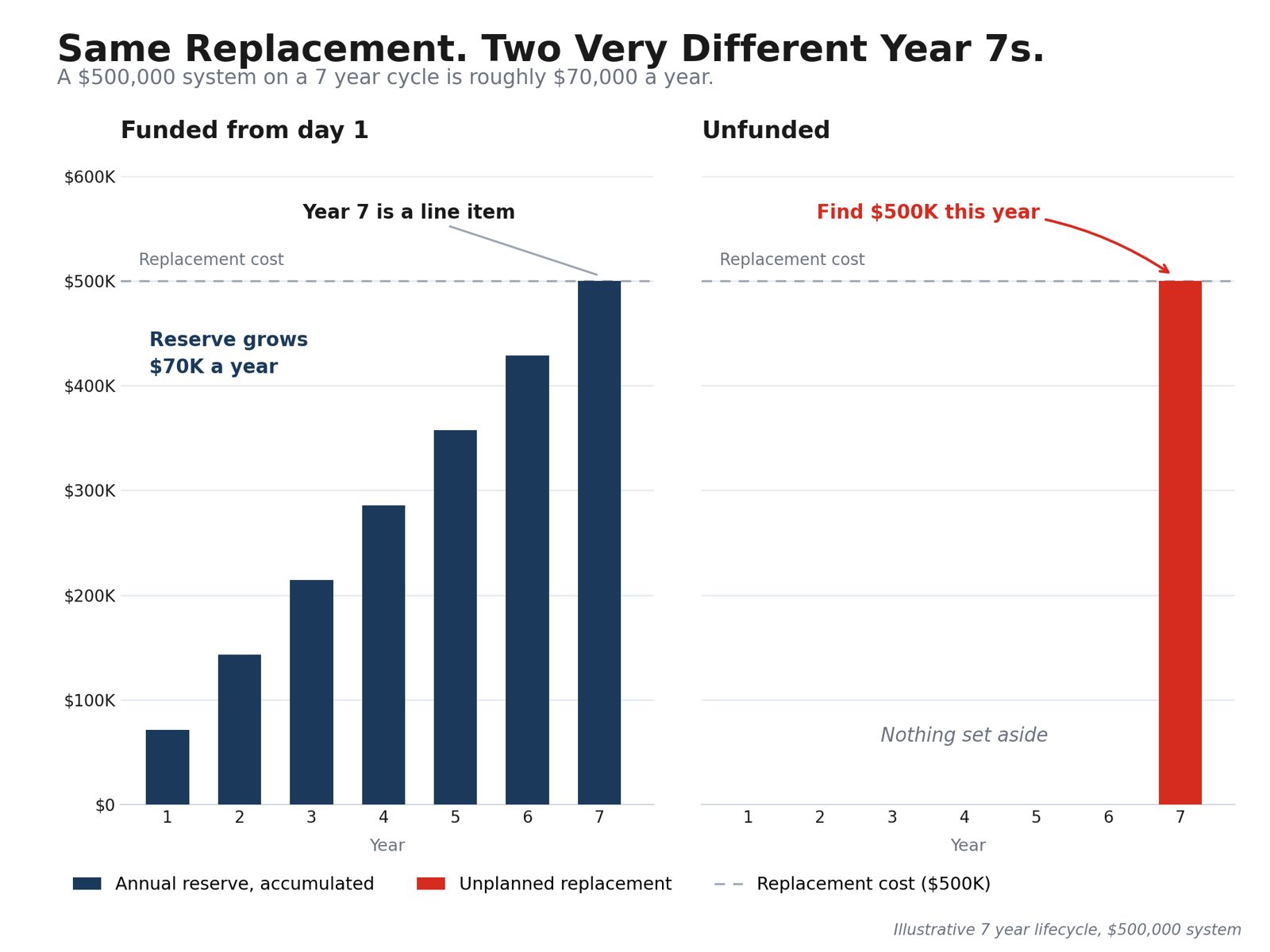
Commercial Integrator published a piece I wrote about putting AV replacement on the accrual line. One argument did not make it into the article, and it comes from the RF side of my work.
I do the RF coordination on some of our projects. In 2017 the FCC finished auctioning the 600 MHz band to wireless carriers, and wireless microphones had until July 2020 to vacate most of it, sooner anywhere a carrier turned the band on first. From 2017 on, every 600 MHz system had a published end date. The systems worked perfectly on the day they were pulled, and many of the customers I worked with still had to scramble to find the money. Some got notices to stop using their systems, and a few were threatened with fines.
The customers who already had an upgrade planned had the easy version. They moved the project up and folded the wireless replacement into it. Everyone else paid for it as an emergency.
The larger systems were on somebody's books, and the books were doing their job. Depreciation spreads the purchase price across the system's useful life. It does not hold any cash. The fixed asset schedule shows an end date as plainly as the FCC's notice did. When a system reaches zero on it, the ledger is accurate and the replacement account is empty.
Finance people will say that is what funded depreciation is for, and they are right. Hospitals do it. Most AV owners do not, and even a funded line only collects what the system cost new.
Find the largest AV system on your fixed asset schedule. Note the year it reaches zero, then ask your controller how much cash is sitting behind that date.