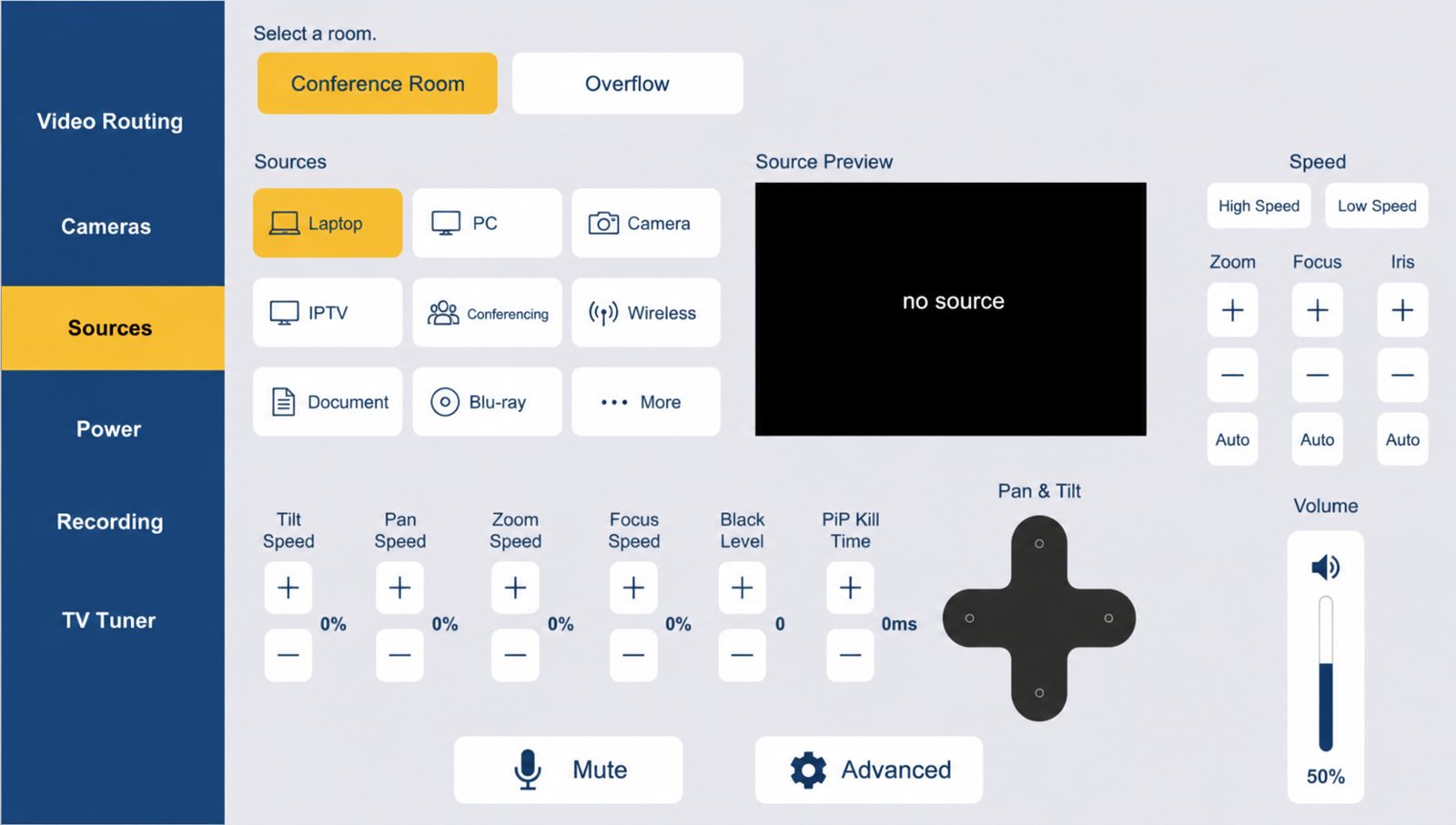
The touch panel in a brand new executive room asked the first person through the door to set the room state, choose a content source, route video, select audio sources, pick which cameras to use, and where to aim them. Every day at 9 AM.
The room belongs to a corporate client with a standardized self-serve room type designed to work without an operator. On a project I ran for them, one of those rooms was repurposed for executive use. A removable wall made the space divisible. The spec added a second conferencing system, wireless microphones, a podium, 4 overflow monitors, multiple ceiling microphone zones, and speaker zones with mix-minus. It was the type of room that normally has an operator, but the room type is self-serve, and that mandate did not change when the complexity did.
Every one of those touch panel functions is legitimate and something that an operator would want. But every one of them is also a question that a person walking in cold is not prepared to answer.
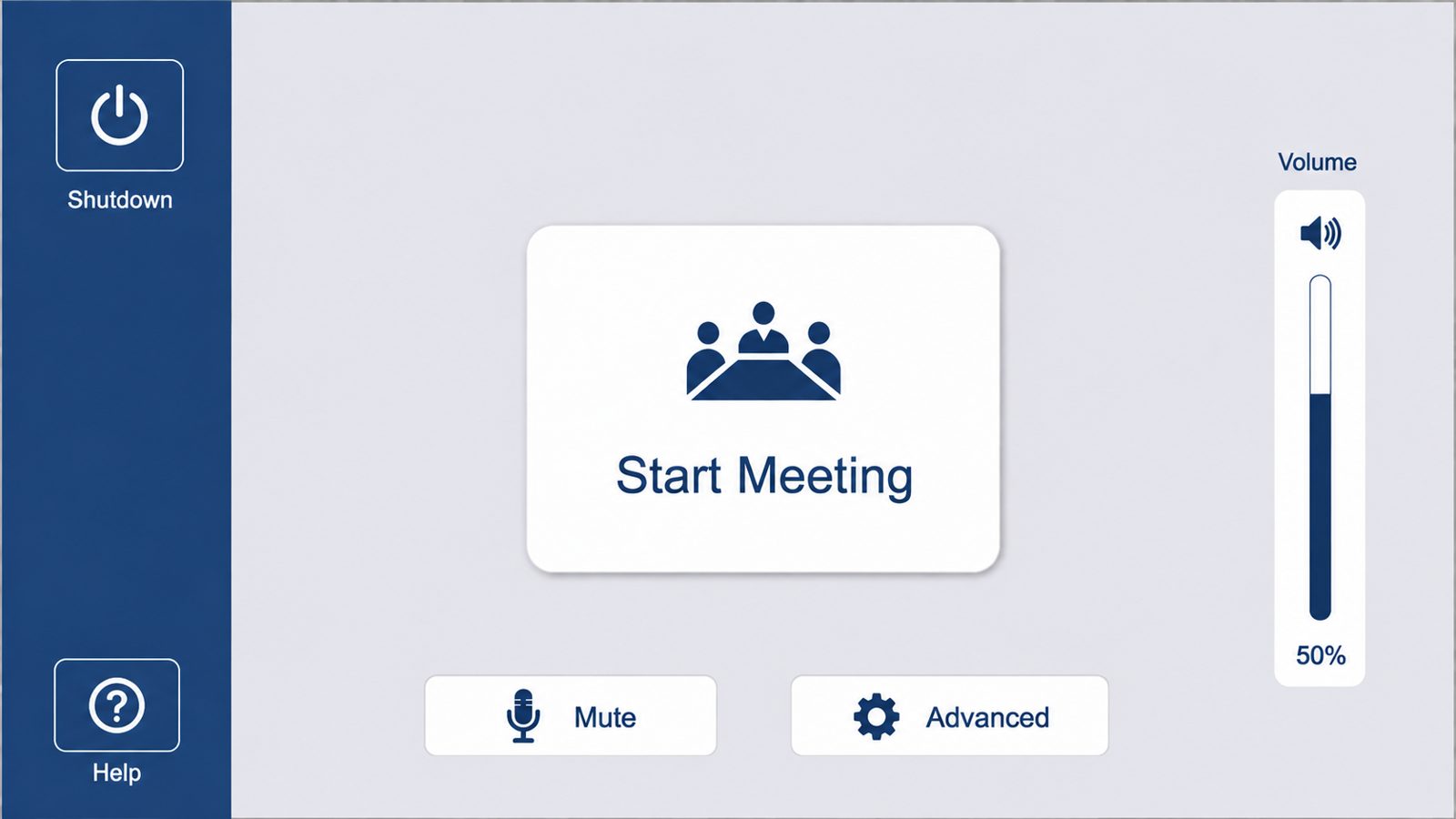
We were back within the first week. The revision did not remove any of those capabilities. It removed decisions. We added a wall sensor so that the room state would be set automatically and built default modes that set everything to a usable meeting configuration. The end user walks up, presses a single button, and the room works. Camera control, mic selection, full video routing, all of it still exists behind an advanced button for the AV team.
The spec required operator-level complexity in a room that was never going to have an operator. That is a conversation for the design phase, and it usually means telling a customer that the room they are picturing and the room that will actually get used are 2 different rooms.
Complex systems. Seamless experiences.