Low latency is one of the most commonly quoted specs in networked AV, and one of the most commonly misunderstood. Latency only matters relative to what it has to stay in sync with, and the spec sheet never tells you that.
Latency is not a single number. It is a budget that accumulates across the whole signal chain: conversion, encoding, every switch hop, receiver buffering, and any processing in the path. A networked device may list an impressive best-case figure, but that number is the floor under ideal conditions, not the latency your system will run in the building.
A Dante system is a good example. Receiver latency is set by the network and device capabilities, from 0.5 milliseconds on a small network to 5 milliseconds on a larger one. The spec sheet tells you what is possible. The design tells you what is appropriate.
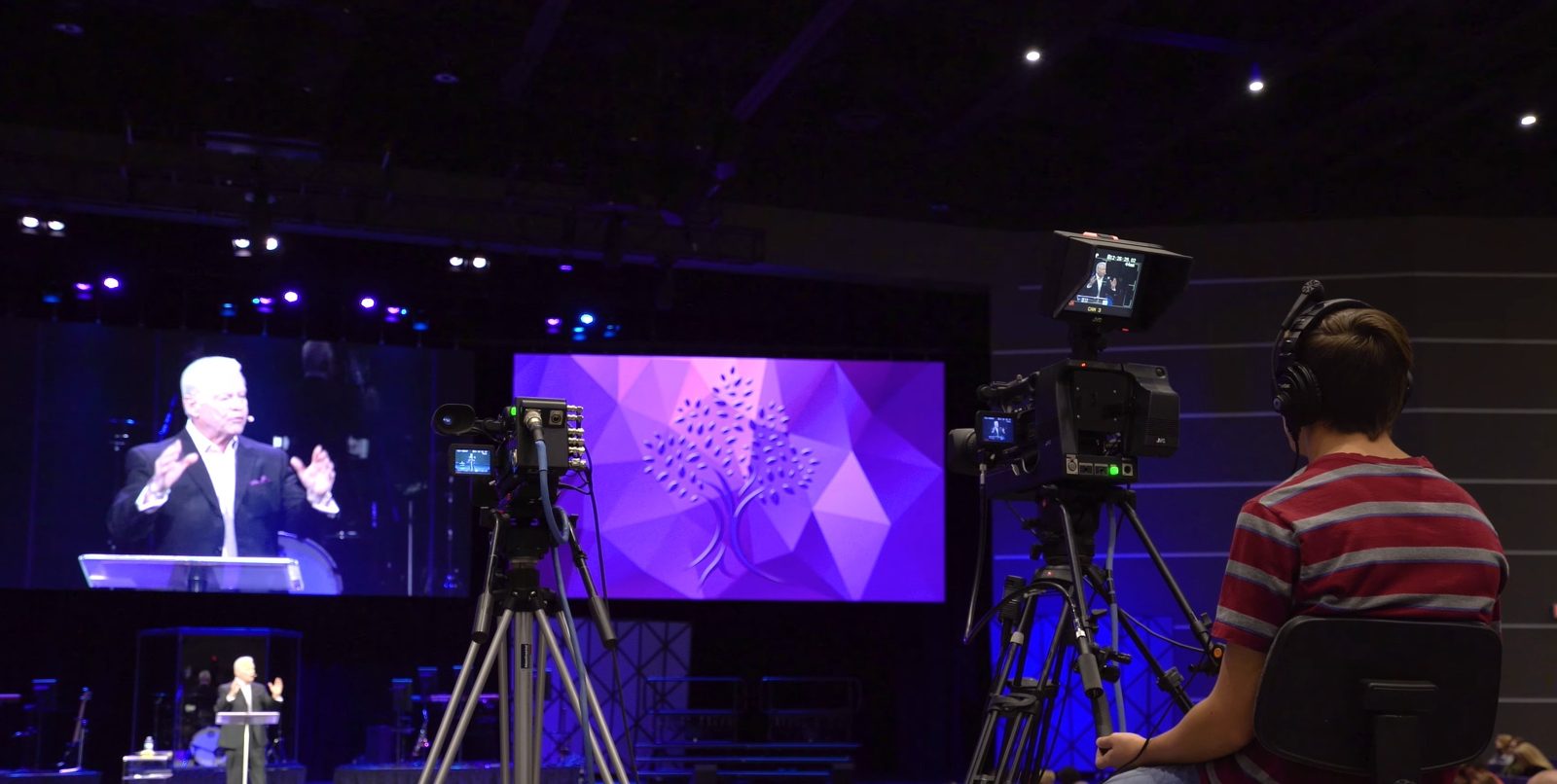
How much of that budget you can spend depends entirely on the application. Image magnification, or IMAG, is the clearest case. The screens beside a stage show the live performer, and if the magnified image trails the person by even 1 or 2 frames, the audience sees the screen fall behind the body in front of them. The eye catches it instantly. Send that same feed to an overflow room down the hall, and a much larger delay is fine, because no one there is comparing it to the live source. Same feed. Same network. Opposite requirement.
The amount of latency is only half the problem. The other half is whether it stays put. Latency that drifts destroys synchronization. A video stream and an audio stream that start together pull apart when their timing references wander, and an audience reads lips out of step with the voice immediately. The system is not too slow. Two parts of it have stopped agreeing on time.
I worked on the design and installation of a system at a major medical campus that carried live video and cardiac monitoring data from a research lab to a clinical team across the campus. The two streams had to arrive with low latency, but more importantly, they had to stay locked to each other. A clinician reading the data against the footage cannot have the numbers lead or trail what the video shows. Low latency was the requirement everyone named first. Holding the two streams in sync was the requirement that made the system work.
That is the job of clock synchronization. PTP, the Precision Time Protocol, gives every device on the network a shared sense of when now is. It does not make the network faster, and it does not lower latency. It disciplines the clocks so a frame timestamped at the source plays out at the right moment at the destination, and streams carried separately stay locked together.
You do not buy low latency. You decide how much delay the application can tolerate, where it is allowed to occur, and what has to stay in sync. Then you design the system to hold that. The spec sheet is where the conversation starts. It is never where it ends.
Complex systems. Seamless experiences.