Owners ask how loud the system will be. It is the wrong question, and answering it well is how you end up with a paging system nobody can understand.
This post has a few numbers in it, but I'll avoid dragging you through the math. The concept is simple. Loudness is easy to specify, easy to demo, and easy to sell. It also stops paying off once speech clears the ambient noise. Signal-to-noise is the key factor, and we aim for a ratio 10 to 15 dB above the ambient level, not an absolute number on a meter. Past that point, more volume is the wrong answer. Turn the system up and the direct sound and the room reflections rise together, so the direct-to-reverberant ratio that governs intelligibility is essentially unchanged. Sure, the page gets louder but not clearer. Level cannot compensate for poor coverage, excessive reverberation, or late-arriving energy, and if you keep pushing, it results in system limiting and distortion that make the problem worse. Consonants carry the information in a word and vowels carry the power, and reverberation masks the consonants first. Raising the volume lifts both and fixes neither.
The question that needs to be specified is intelligibility: how much of the message survives the entire path from the talker to a listener. Airports, transit terminals, and stadiums depend on it, because the page may be an instruction people have to act on immediately. A system can hit every loudness target on the sheet, sound powerful in an empty room, and fail the only test that matters.
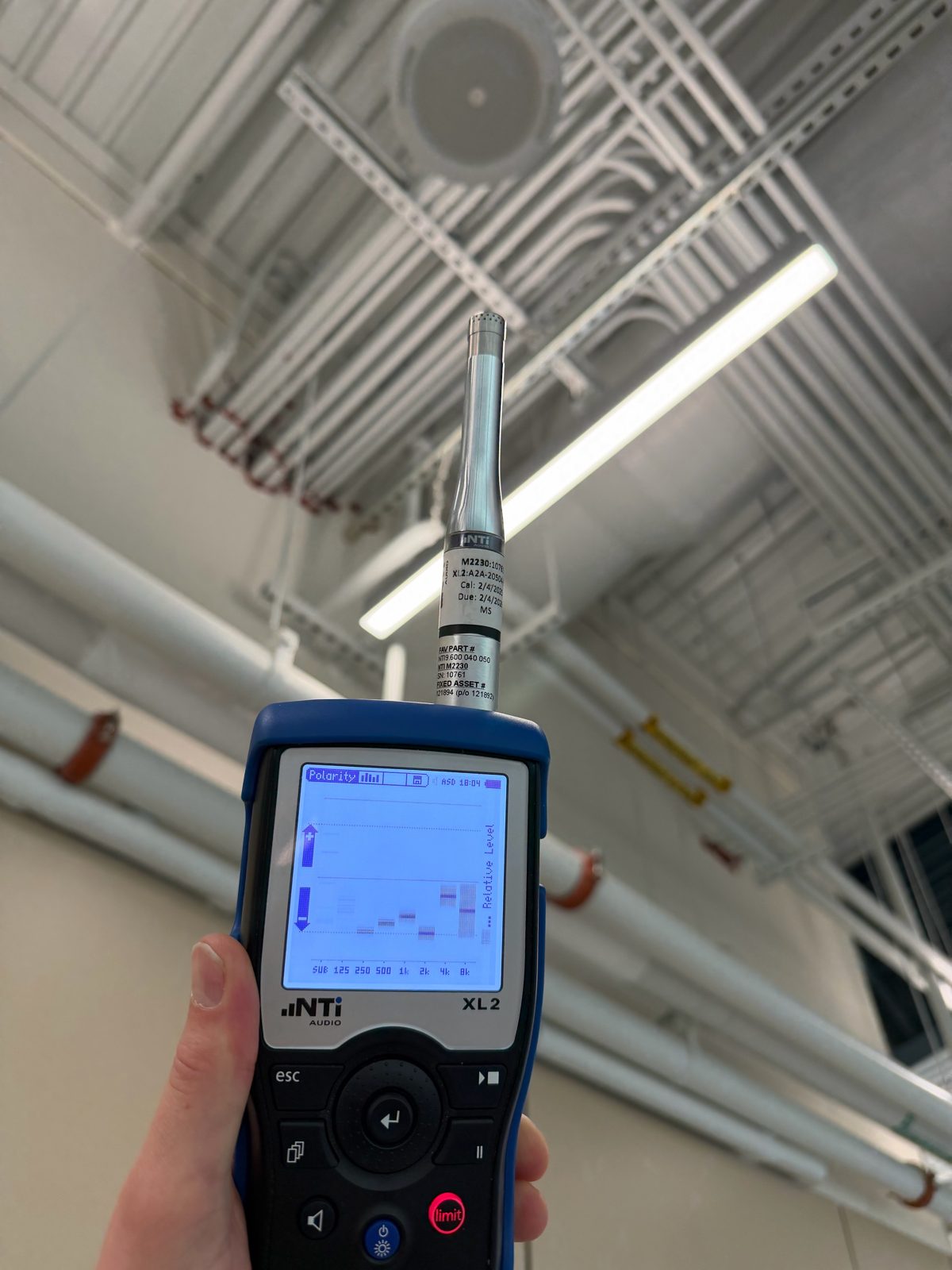
Intelligibility is measurable, which means it belongs in the specification. We measure it with STI. STI scores how much of the message survives the path, and STIPA confirms it in the field. Set an STI requirement appropriate to the application, 0.6 at a minimum and 0.75 where it matters most, and define where in the space and under what ambient conditions it has to be met.
When the spec becomes intelligibility and not loudness, it changes the entire conversation. The design gets judged on the message getting through, not on a number that impresses in a demo.
Specify the outcome, not just the output.