USB-C is the best and worst thing to happen to AV in years.
An AV rack carries a dozen connector types. USB-C is the first one that handles audio, video, network, and power, in either orientation, on almost any device a client walks in with. That is why it is spreading through our designs.
Last year I was onsite on a Monday for a training when my engineering team could not get the customer’s laptop to send video to an AV over IP encoder. Everything on the laptop read correct. Nothing came across the network. Someone swapped the cable as a last resort and the system came up.
That Wednesday, a different venue, USB-C to 3G-SDI converters that would not pass signal. Cable again.
I kept both cables. A few weeks later I bought a pocket USB tester and put them on it. The first was not rated for USB 3. The second was not rated for Thunderbolt. In the hand they looked like every other USB-C to USB-C cable in the case.
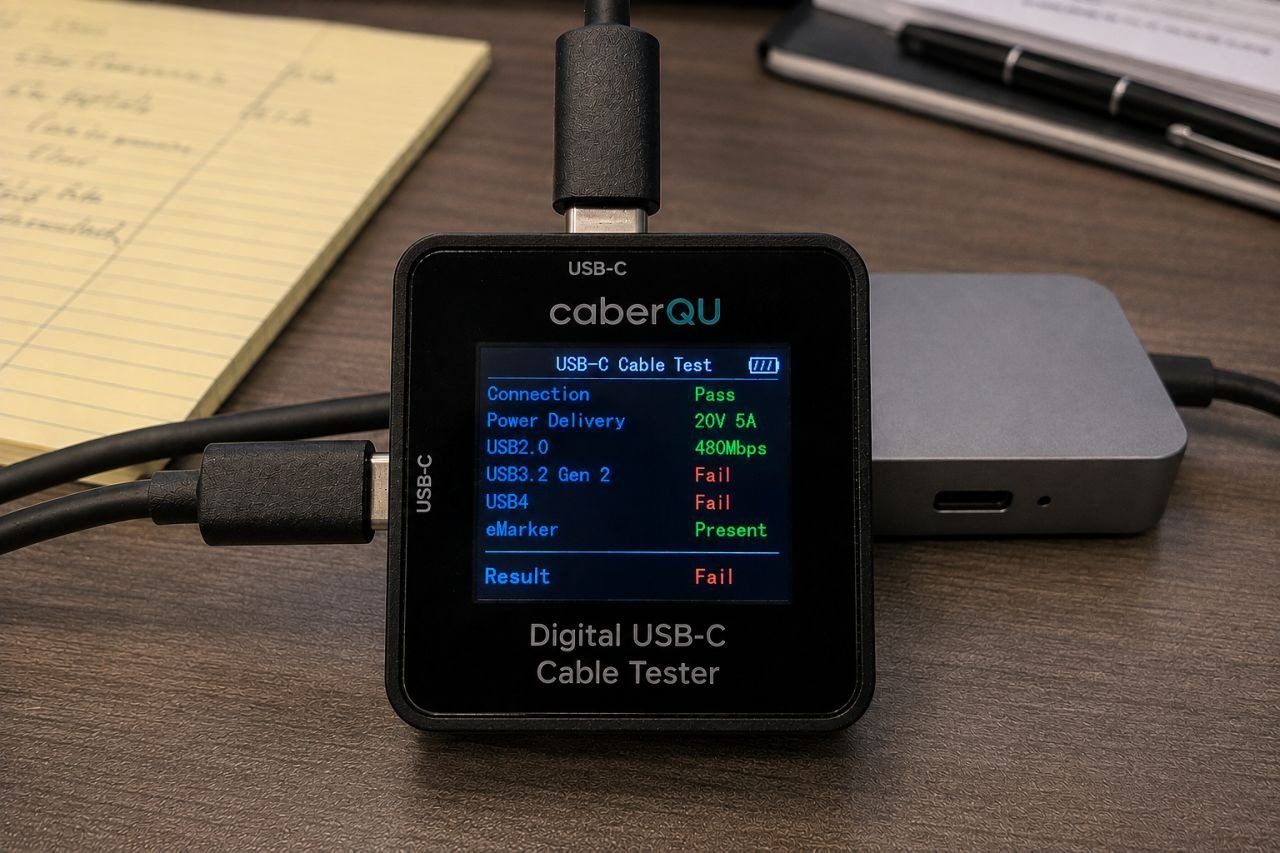
A charge-rated cable carries power, the configuration channel, and the USB 2.0 pair. The 4 high-speed pairs that USB 3 and DisplayPort need were never in the jacket.
Under one connector shell you get 480 megabits or 80 gigabits, 15 watts or 240, a passive cable that works at half a meter and fails at two. Visual inspection cannot separate them, and the label is not always honest. USB-IF certification helps at purchase but it does nothing about the cable that has been in a table box for 2 years since a user swapped in a phone charger.
We do not accept this anywhere else in the building. Nobody pulls fiber or category cable and calls it good because the ends are terminated. We certify it, we keep the report, and the warranty depends on it. USB-C carries display, audio, network, and power into the rooms we deliver, and it gets a visual inspection.
Pocket testers come in 2 classes. Mine reads what the cable declares about itself, which was enough to catch both of these. A pin mapper physically checks which conductors are connected. Neither verifies signal integrity, where a fully wired cable with an honest chip still fails on length, and even the bench instruments that do that work stop short of the top USB4 rates.
No warranty forces any of this on USB-C. We bought the testers anyway.