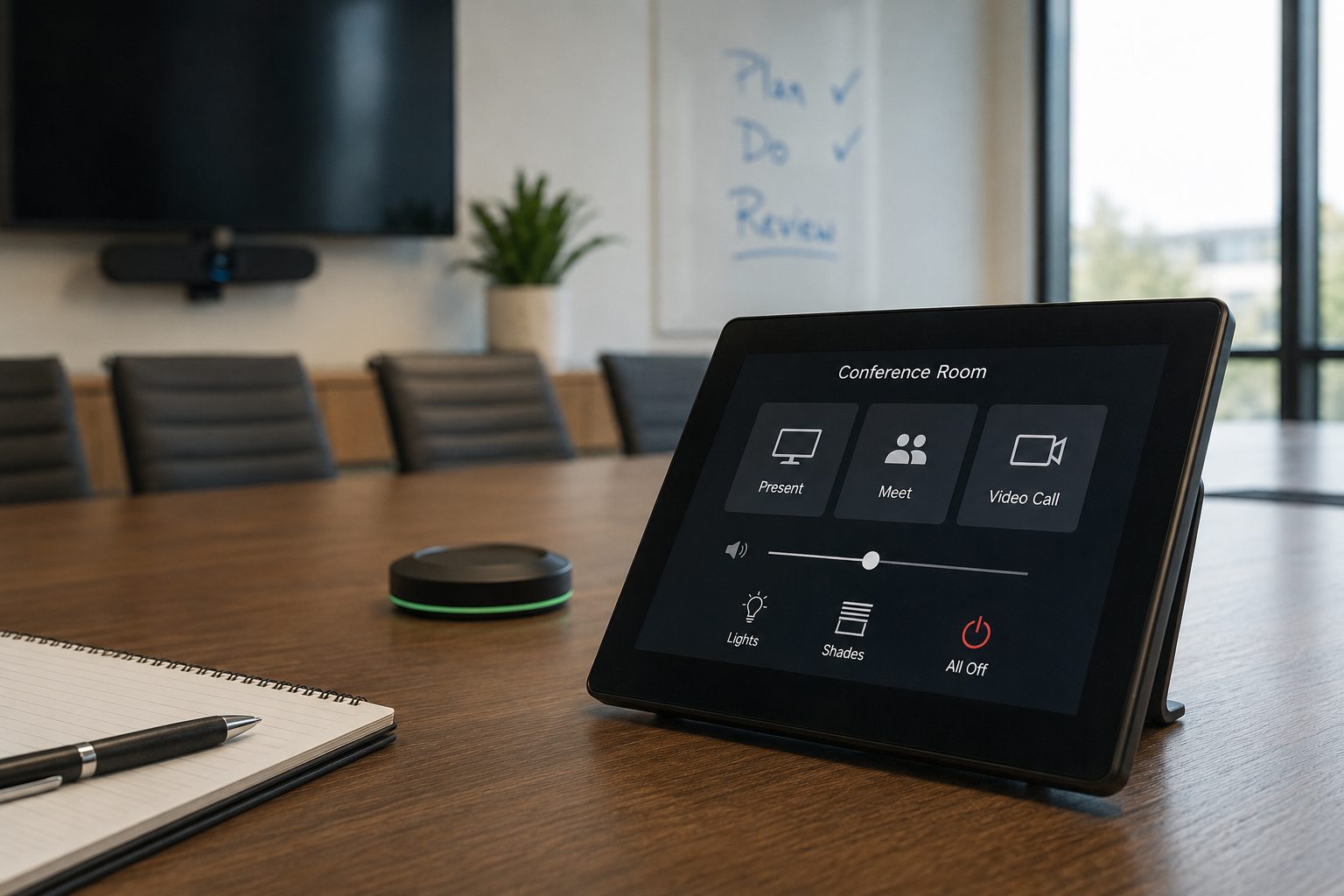
A control interface is not a remote control for the rack. It is the face of the system, and most are designed for the wrong person.
The instinct in our industry is to put everything on the panel, because the system can do it and the screen has room. That is not a user interface. It is a control surface for the people who built the system, handed to people who just need the room to work.
The test I use is simple. My wife, Lisa M Shriver, is an opera singer. She also works as a program coordinator at a major medical institution. She is smart, accomplished, and not an AV engineer, and she should not have to be. If she can walk up to a panel and make the room do what she needs without a manual and without calling for help, the design is right. If she cannot, the design failed, no matter how complete it is.
A few years ago we were asked to build a UI that exposed advanced routing, image control, individual microphone control, and hundreds of other parameters. The customer's AV team requested that design and approved it. We delivered exactly what was specified. A few weeks after the end users moved in, I was fielding calls from people who could not use the room. Some could not find the function they needed inside the complexity. Others changed a setting they did not understand and broke the meeting. The system could do everything, and that was the problem.
The AV team was not wrong to want that depth. They needed full access to run and service the system. The mistake was making the technician's interface the same interface everyone else had to use.
So we stopped designing one panel for two different users. We built a technician panel that exposed the full depth of the system for the AV team, and a separate, deliberately simple panel for the people who actually use the room. Clear buttons, the few things they need, nothing they do not. Years later, the technician panel sits largely untouched. The end-user panel runs multiple times a day.
That is the whole lesson. The measure of a control system is how little the user has to think about before the room does what they came to do. To the person standing in front of it, the interface is the system. They never see the rack, the network, or the code. They see the panel, and they judge everything behind it by whether the panel does what they expect.
Design the face for the person who has to use it, not for the people who built what is behind it.
Complex systems. Seamless experiences.