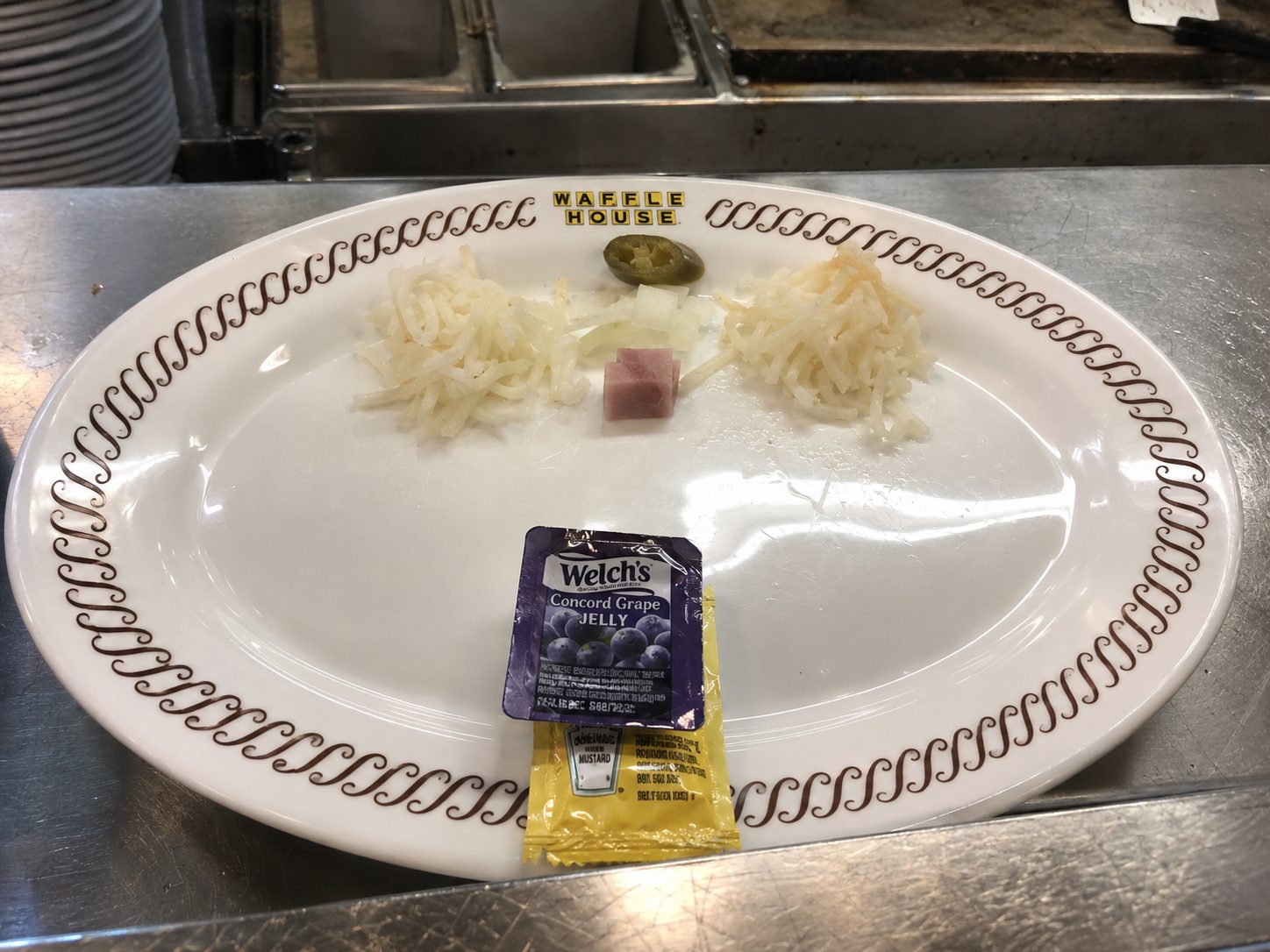
At Waffle House, the cook works off the plate. As the order is called, he sets a mark on the plate for each item, then cooks and builds straight from those marks. The ticket stays with the server. The plate carries what the next step needs and nothing else.
We build the same way in our fabrication shop, for the same reason. A tech building a rack should not have to sort the entire system to find what his one assembly requires, so there is no reason to hand him the full drawing set, 200 pages, when the task in front of him is a single rack. Handed 200 pages, he has to work out which 3 apply before he can pull a part. That is design triage, and it does not belong on the assembly line.
What he needs is the sheet for his assembly and the equipment list that goes with it. That scoped packet is his version of the mark. It gives him what the task requires without asking him to reconstruct the decisions that produced it. The assembly can be a full broadcast rack or a prefab room kit with 3 cables and an HDMI decoder. Either way, the tech reads the list, pulls the parts, and builds.
Both keep the interpretation and the variability out of the field. The common approach in this industry is to ship the manufacturer boxes to the site and build there. Building the kit in the shop instead, in a controlled space and fully tested before anything leaves, is the deliberate opposite, and it is not free. When the design changes after the kit is built and shipped, the rework lands on site. We have had it happen. A device the customer had already signed off on was changed to a different brand after the rooms were built, and all of it became field work. The efficiency the kit was built for went with it.
The trade still favors the shop. A rack built and tested before it reaches the site is a large enough advantage that the rework risk is worth carrying. Good process hands the person doing the work what the next step needs, the way the marked plate does for the cook and the scoped packet does for the tech. Expect an integrator's build process to move the interpretation out of your building and into the shop.