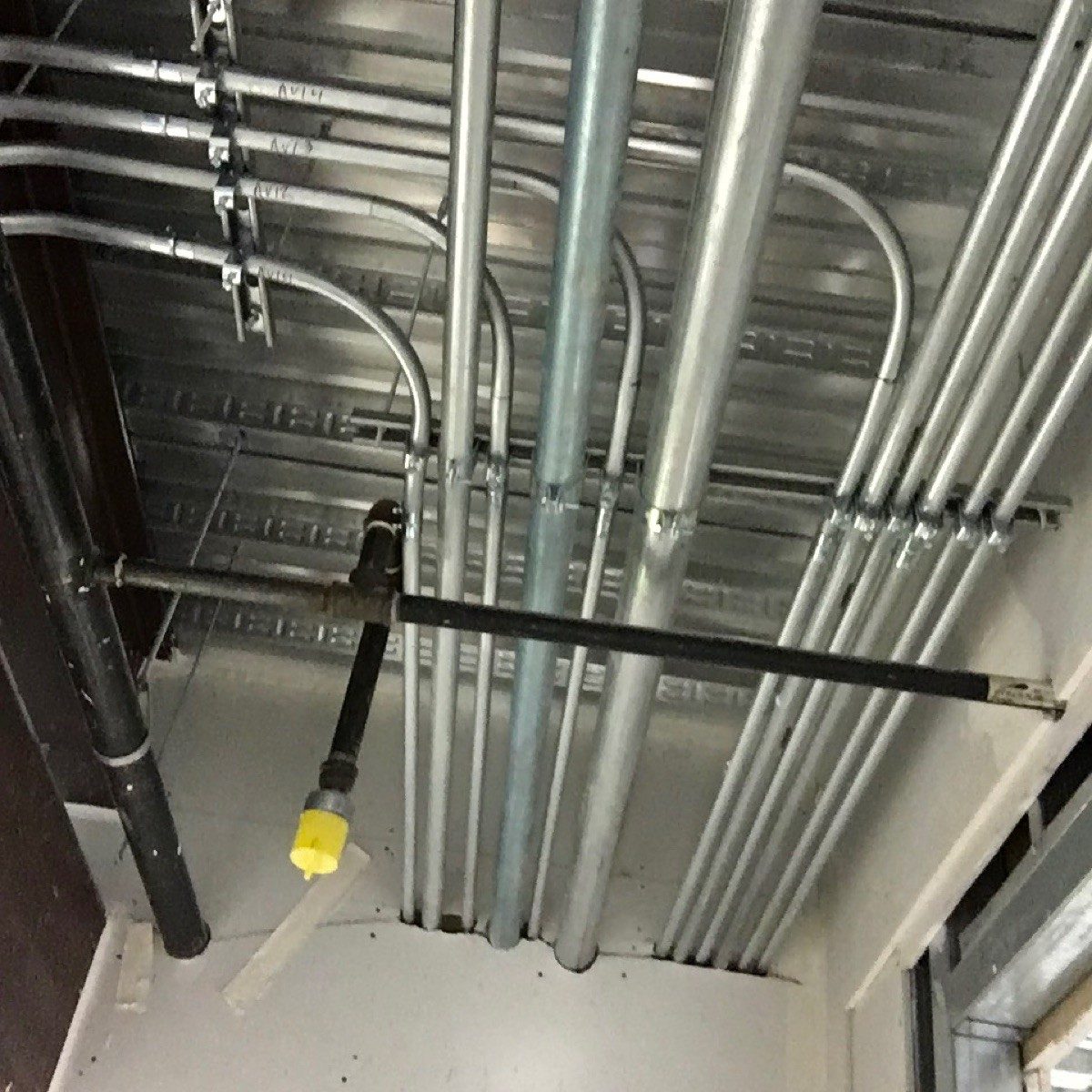
The most expensive cable on a project is not the one with the highest price per foot. It is the one nobody ran, or the pathway sized too small to carry it, discovered after the walls are closed, when adding it means opening a finished building or doing without it for the life of the space.
Infrastructure is the cheapest part of an AV system to draw and the most expensive to change. Conduit, back boxes, and plate capacity cost little on paper, but once they are set in concrete and behind drywall they limit everything the system can become. You can swap a mixer in an afternoon. You cannot add a pathway that was never built without tearing the building open.
I was the project manager on a new theater in Houston. The design called for robust AV infrastructure, but those pathways were not coordinated with the mechanical, electrical, and plumbing trades competing for the same wall and ceiling space. In the field, our conduit came up short, and we reduced infrastructure again and again to fit what remained. The building works, but the team that runs it pays for those cuts every week, pulling temporary cable down hallways and through ceilings to do what the permanent infrastructure should have carried. That cost never shows up in a budget. It is paid in labor for as long as the building stands.
Years earlier I was the director of technical operations for a performing arts center near Boston. The console sat in the orchestra seating, where it cost 6 premium seats and distracted 5 more. By our second season we moved it to the balcony, a compromise on mix position but the right operational and financial call. The balcony plates were undersized, with no pathway to pull more wire from the stage or the rack room. The infrastructure made the decision for us. We went to a fully digital stage box, which carried the whole console's worth of signal through the little connectivity the plates already had, where an analog snake never could have fit. It was cutting edge then and a real limit on which consoles we could consider. A choice that should have been ours was dictated by a plate sized too small years before.
Both buildings taught the same lesson from opposite sides of the handoff. Infrastructure is the part of the system you should be most reluctant to value-engineer down, because adding it later usually means opening the building. It deserves the most forethought, the most generous sizing, and the hardest coordination between the trades sharing the space.
Everything downstream can change. The conduit in the wall cannot. Plan the pathways first, size them beyond today's design, and coordinate them like the building depends on it, because for the next 20 years it will.
Complex systems. Seamless experiences.