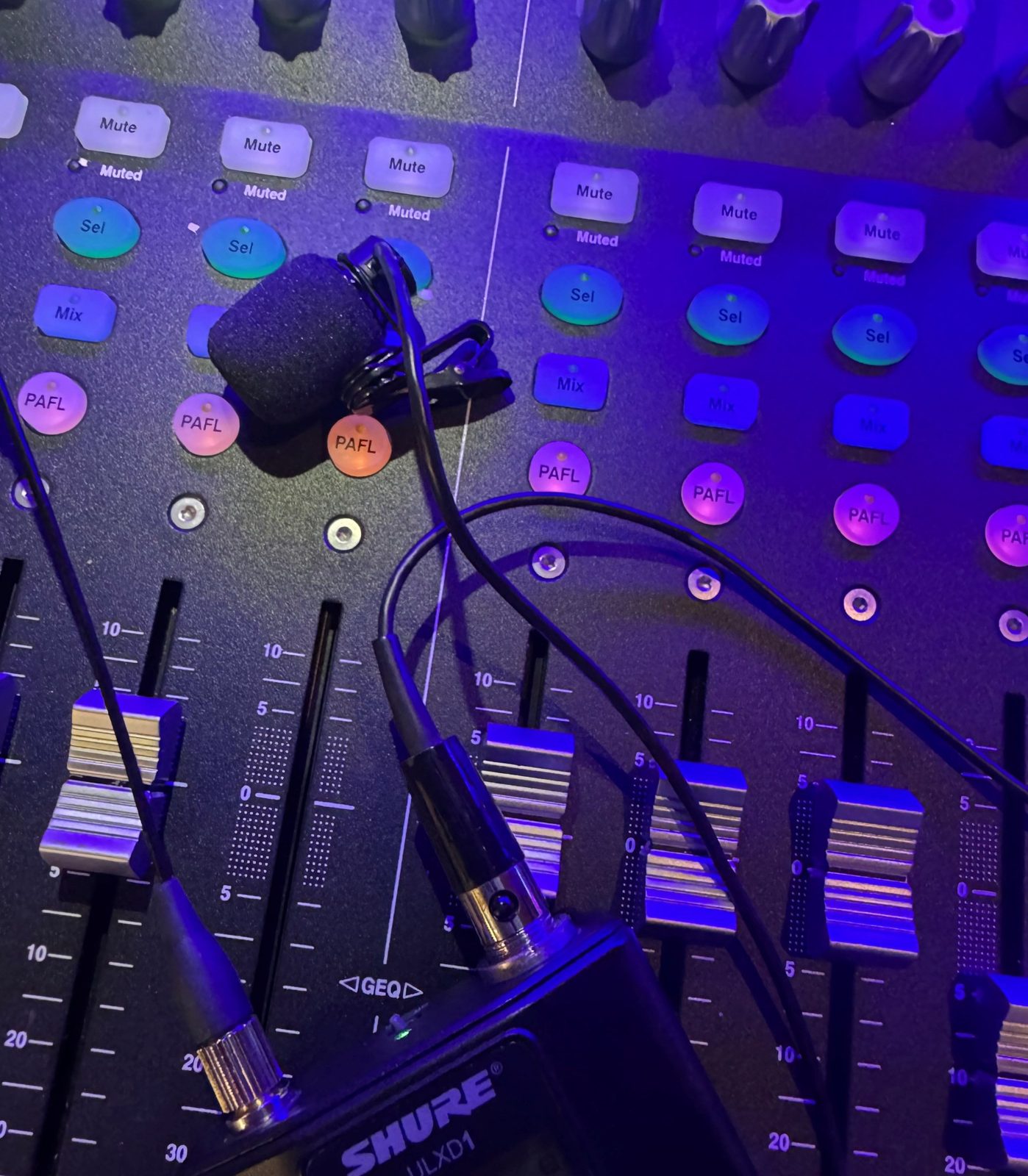
There are 2 moments in a show that put an audio engineer on edge. The first is the top, when the faders come up on the first song and you find out whether it sounds the way it did an hour ago. The second is the big change, and in a house of worship or at a corporate event it is almost always music to speech.
The system is the same one that carried the band. The source, the gain-before-feedback requirement, the spectral content, and the coverage priority all changed at once. After 20 minutes of a loud, full sound, a lav comes up 8 inches off the mouth, notched hard, on a talker standing where nobody stood at sound check. It rings, or it comes up thin, or it sits muffled under the keyboard pad so the words never reach the back row.
The common fix is to work the channel strip until the lav sounds acceptable. High-pass, a few notches, some presence, more fader. On its own that lands somewhere between poor and passable, and if the processed channel also feeds broadcast or an overflow room, those feeds inherit every cut you made to keep the room from ringing.
My approach treats the transition as an operating mode for the whole system. In the room I mix every week, that means 2 scenes, and neither touches routing or bus assignments. The first does not try to make the lav sound right. It makes the system respond the way speech needs it to. The system EQ shades a touch brighter, notches go in where the room is most likely to ring, the subs come down or go silent, and the front fills may come up. That scene works regardless of who is talking. The second recalls the channel strip for the specific talker's voice. The ring control lives on the system side, where the broadcast feed never hears it, and the channel strip only has to fit the person.
The first scene also puts a compressor on the master bus, something I do not run on a band mix. Under a spoken word it ties the pad and any program material to the voice.
Some of the best engineers I know will not recall anything mid-service, and they have a point. That is why these are scoped and rehearsed. I would rather execute a known system state than redesign a channel strip while the room waits for the first sentence.