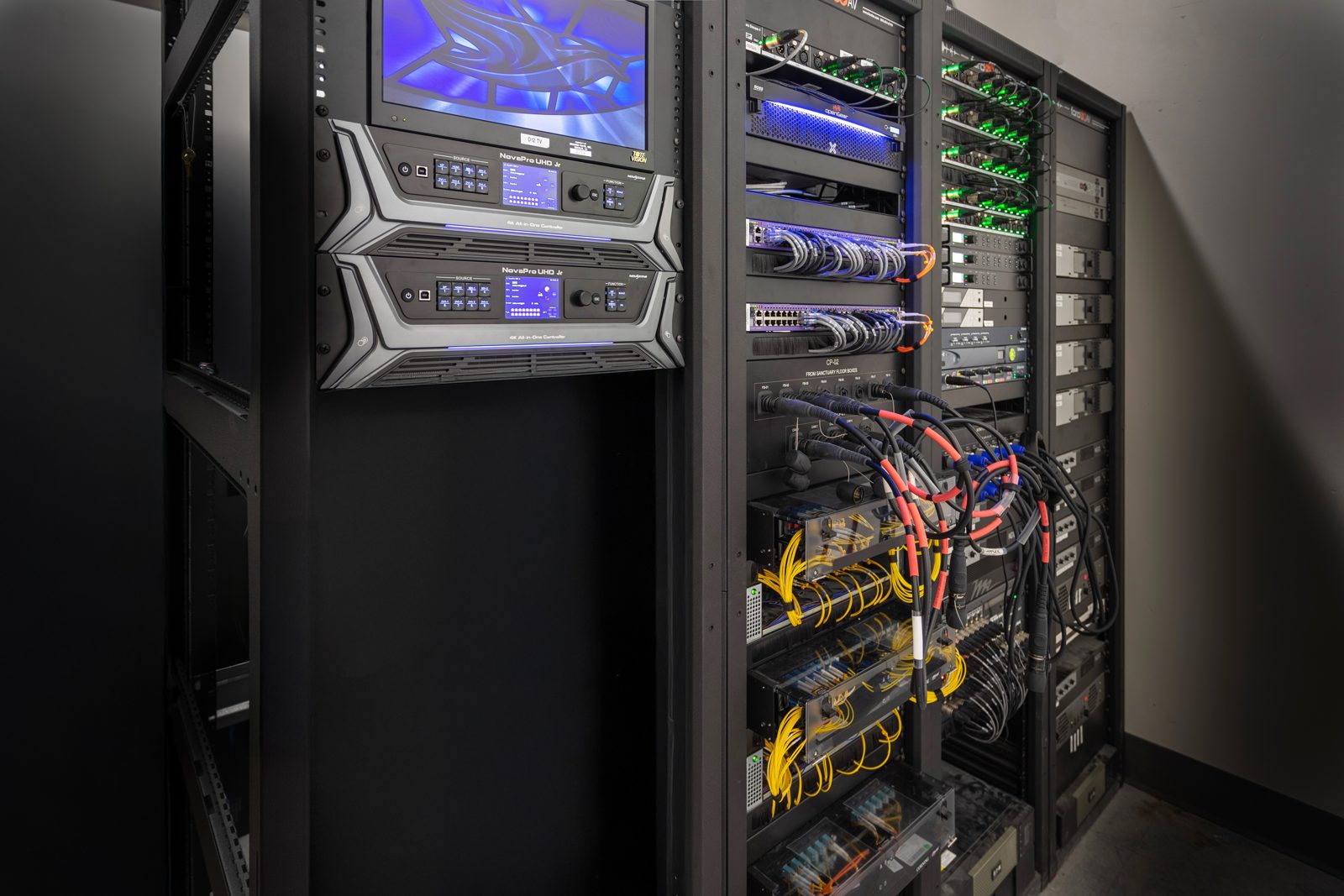
Two of my customers brought down their entire AV systems doing the one thing their IT department trained them to do. They updated the firmware.
“Patch everything” is good advice for your laptop and bad advice for an AV system. The newest firmware is frequently the wrong firmware, and the reflex to install it the moment it appears causes more failures than it prevents.
A finished AV system is not a pile of independent devices. It is a set of components that were tested together, tuned together, and validated to work at specific versions. The control program was written against a particular DSP firmware. The audio network was commissioned with its devices on matched builds. Every one of those was a known-good state that someone confirmed worked. An update is a change to something that already works, and in a high-stakes room that is a risk you take on purpose, with the people who built it, not by habit.
This post was inspired by two recent examples of customers who decided to update on their own. First is a complex council chamber we installed a few years ago. The Customer updated the firmware on the DSP after buying some new gear. The new firmware broke the control system’s ability to talk to the DSP. Audio dropped, and because the control system ran the video too, the video went with it. This resulted in several days of downtime. My engineering team went to site, updated firmware across the system, and rewrote control code against the new modules to bring it back. The second example is a corporate headquarters that pushed a firmware update onto its network that was incompatible with parts of the AV system. It crashed the entire audio network. Engineers from Houston were on same-day flights and spent hours rebuilding what the update broke.
Neither customer did anything reckless by their own logic. They did exactly what good IT practice trained them to do, which is keep things current. That instinct is correct for laptops and servers. It is wrong for a commissioned AV system, where the devices were validated against each other and a single version change can take down the room.
This is not an argument to freeze a system forever. There are real reasons to update, including security patches, manufacturer requirements, and bugs you are actually hitting, and when one of those applies the firmware should be touched. What matters is who makes that call and who does the work. The decision belongs to the AV team that built and supports the system, because they are the only ones who know what every change will impact. “There was an update” is not a reason, and the customer’s own IT department, however capable on its own systems, is not the right hand on the keyboard.
You would not update the firmware on an MRI machine because a notification appeared. A mission-critical AV system deserves the same respect. Call the people who commissioned it.
When has an update solved a problem you actually had, instead of creating one you did not?