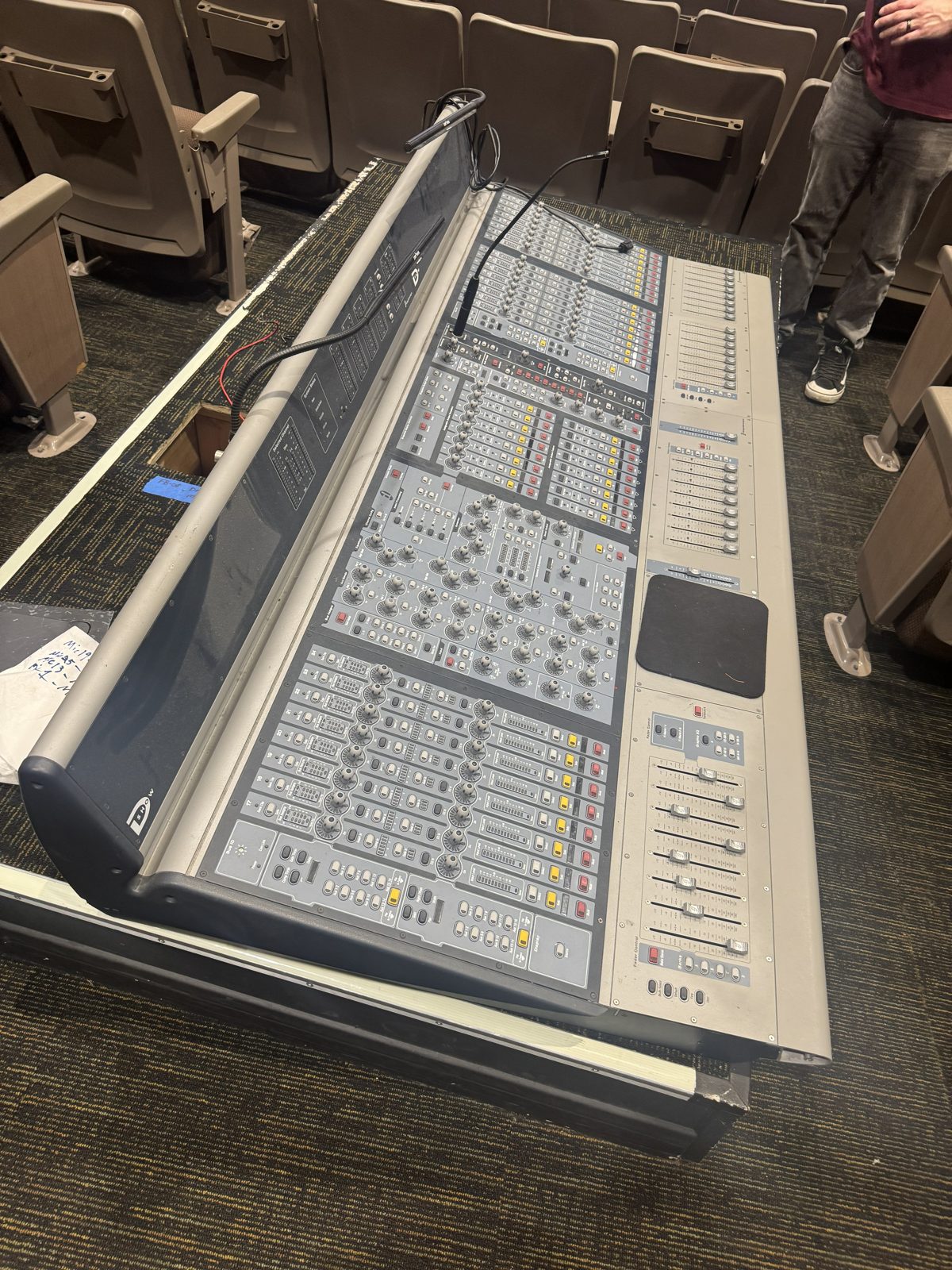
When the D-Show was released, it was the console I dreamed of mixing on. I took this picture of one sitting in a performance space after we pulled it from service, on its way to e-waste. It still powered on and it still worked. That is what end of life usually looks like. Not a dead system, but a working one you can no longer support.
The D-Show was discontinued a decade ago. No new parts, no manufacturer support, no path forward when something finally does fail. A system in that state is running on borrowed time, however well it performs the day you look at it.
Everything we install reaches that point, and the timing is predictable enough to plan for. Lifecycle is not a warranty question. It is a design input, and it belongs in the buying decision from day one. The plan should cover repair, upgrade, and eventual replacement.
It depends on the room. We plan roughly 3 years for high-end corporate, 5 for standard corporate, and 7 for a house of worship. Specialty spaces like stadiums and performing arts centers run on a multi-part cycle, where speakers and amplifiers can reach 10 years while the head end needs a refresh closer to 5.
A running joke in our office is that everything we build, we get to throw away in 5 years and start over. We say it after the hardest installs, and we laugh because it is close to true.
Most buyers quietly believe a good system should simply keep running. The responsible answer is the opposite. A serious integrator designs for the end from the beginning, budgets for the refresh, and tells you when support will run out, so the day the system comes out is a plan and not a surprise.
Everything we build eventually comes out. The real question is whether that was planned from the start or discovered at the end. Buy for the application, and buy for the whole life of the system, not just the day it goes live.
Complex systems. Seamless experiences.