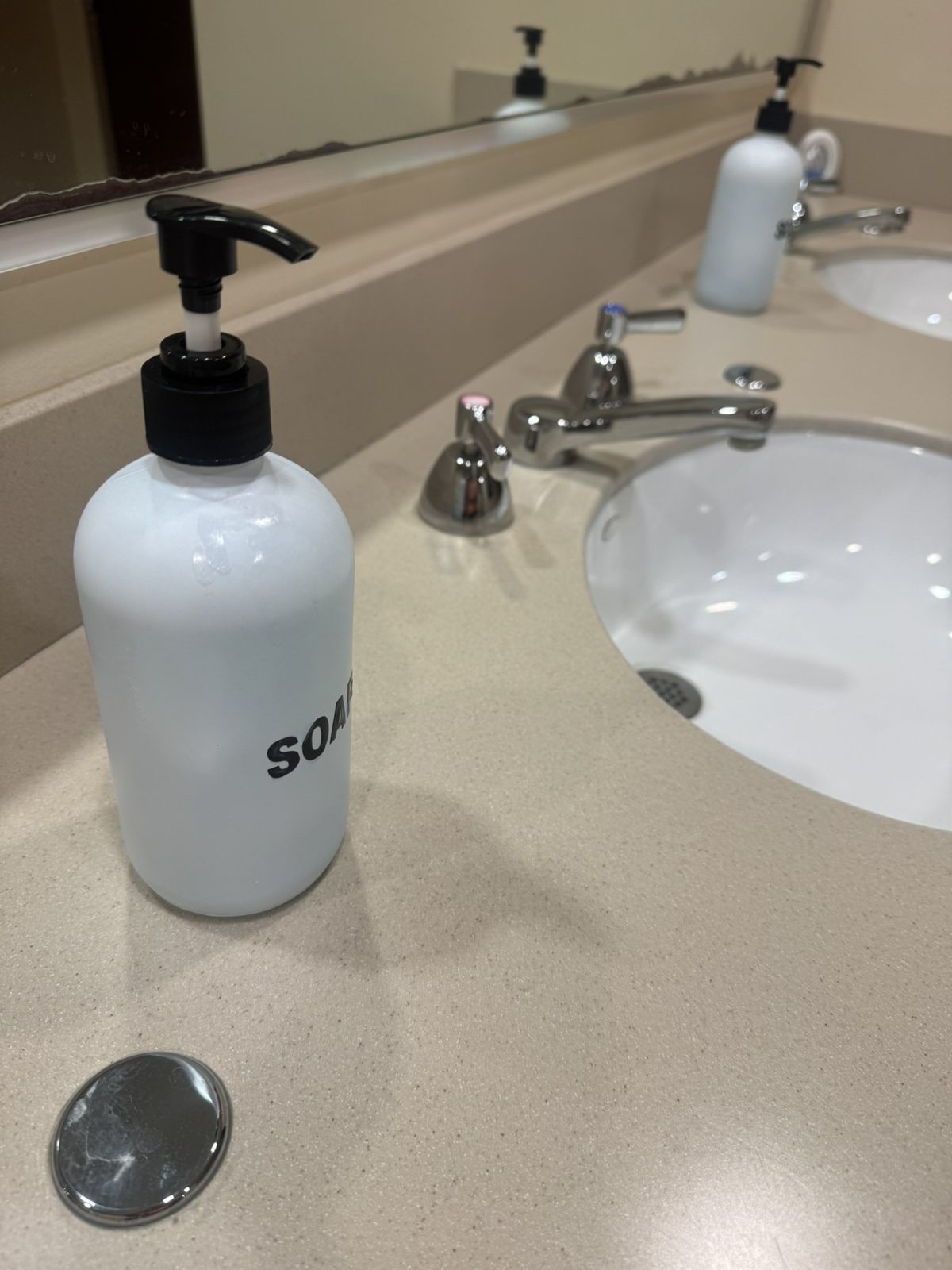
Last weekend I stopped in the restroom at my church and found a bottle boldly labeled SOAP sitting at every sink.
Those bottles replaced the built-in touchless dispensers, which never worked right. You waved a hand underneath several times to earn a few dribbles. The church looked into fixing them and found what most owners find when they open that door. Each unit was expensive, hard to service, and ran on batteries somebody had to buy and change. The fix was a pump bottle on the counter. Easy to fill, easy to use, cheap.
Nobody specified those dispensers to make life difficult. Somebody assumed the more sophisticated device was the better one, and nobody tested that assumption against the actual job, which is getting soap onto a pair of hands.
We do the same thing with rooms. Those of us who love this industry love complexity, and I have never met a button I did not want to push or a knob I did not want to turn. That instinct is part of the craft. It is also how a conference room ends up with motorized microphones, a DVLED wall, two confidence monitors, wireless presentation, wireless handhelds, ceiling microphones for overflow, networked speakers, and native Zoom and Teams calling. Sometimes that room is exactly right, and I have designed it and defended every line of it. Sometimes the honest answer is a video bar and a couple of microphone pods, and the customer gets a room that works the first time and keeps working after we leave.
Complexity is easy to justify on paper, because every added capability answers a question somebody raised in a meeting. Simplicity takes an argument. It requires knowing what the room is for and having the nerve to say the rest is not needed.
Complex systems. Seamless experiences.