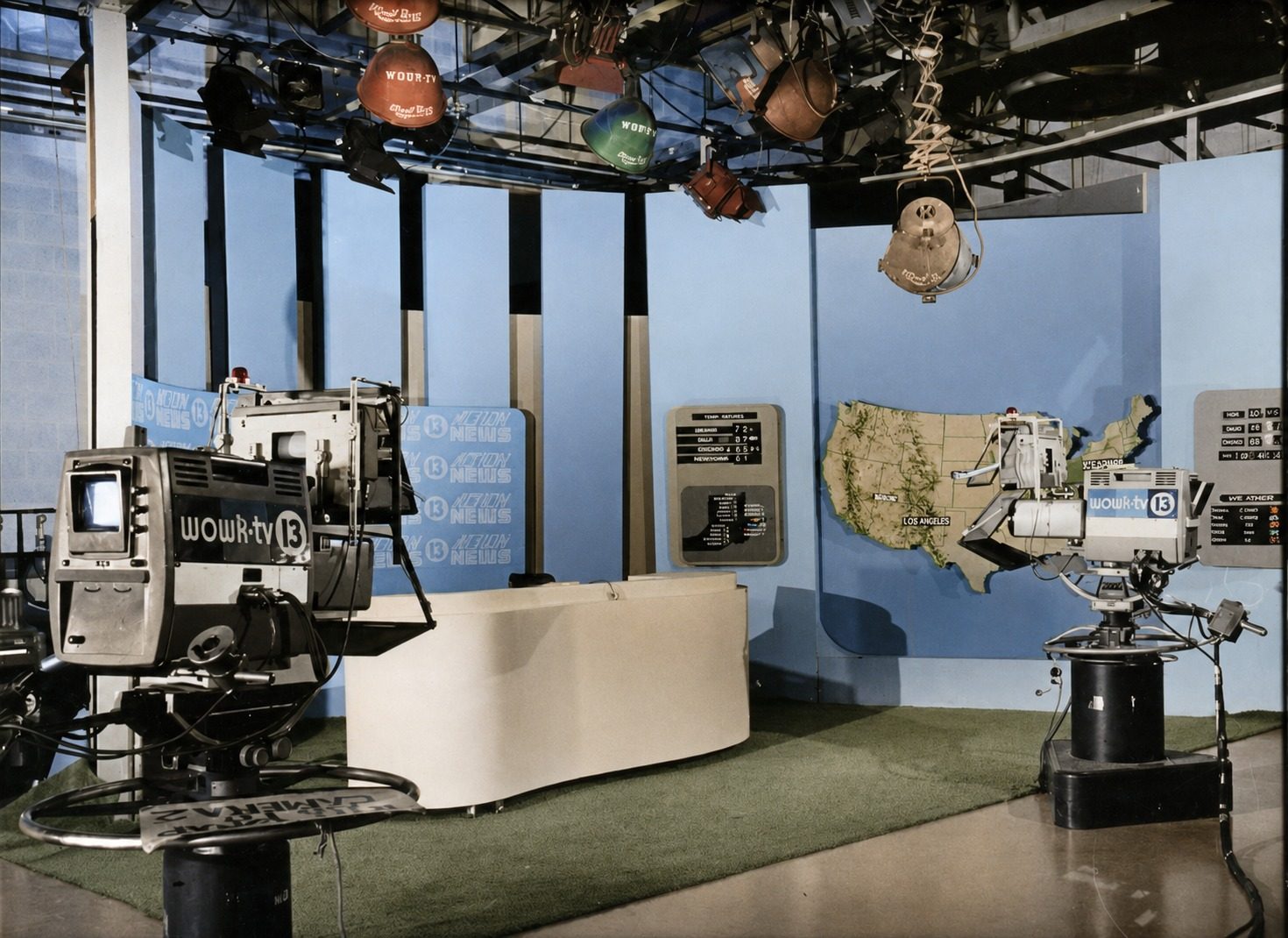
The best leader I ever watched was my father. He spent his career in television and retired from WOWK 13 News in Huntington, West Virginia, in 2001 as a senior director. He would still take the occasional shift as a camera operator.
He didn’t need to. He had the seniority, the experience, the crew, and every reason to sit in the director’s seat and let other people touch the equipment. He took the shifts anyway. Part of it was to stay sharp, because a skill you do not use is a skill you lose. The larger part was what it told his crew. He could do the job he was asking them to do, and he was willing to do it next to them.
He was also a prankster. He loved to give the camera pedestal a hard shove, jump on, and truck the shot clear across the studio during a live broadcast. He could only play like that because he knew the work cold.
He taught me that respect on a crew is not handed down with a title. It is earned by demonstrated competence, and it is renewed every time the person in charge proves they still understand the work.
I think about that often now that I sit in an executive seat. I no longer run the projects, nor do I write the proposals that lead to the next sale. I lead the people who do, and the job is to build the team, clear the obstacles, and trust the experts I hired to be experts. A manager who insists on doing every job himself is not leading. He is in the way.
Staying close to the craft is not the same as taking it over. I still handle the RF frequency coordination and some of the system tuning on select projects, and I still go with my account managers to meet our customers. Not because the team cannot, they can, but because I refuse to lead work I no longer understand, and because the people I lead should know the person above them can still do the job.
My father understood that 20 years before I did. The title got him in the booth. The hours behind the camera were how he kept the respect of everyone in the studio.